
How cannabis topicals and oils are made — and why the jar is the hard part.
A cream looks like the gentlest product in cannabis. It is also the most chemically temperamental: oil and water forced to live together, an active ingredient that only dissolves in one of them, a legal potency band that doesn't care how viscous the product is, and a label that isn't allowed to promise anything. Here is how topicals and tinctures are actually made, why so many fail in the jar, and what separates a topical people buy once from one they rebuy.
What counts as a cannabis topical?
In Canada, a cannabis topical is a product intended for use on skin, hair or nails: creams, balms, salves, roll-ons, bath bombs. One product people lump in doesn't belong — tincture oils are usually not topicals. A tincture you swallow is a cannabis extract under the regulations, with its own limits and rules. The distinction matters because the two classes are regulated, dosed and manufactured differently, even when they sit side by side in the same brand line.
How is a cream made?
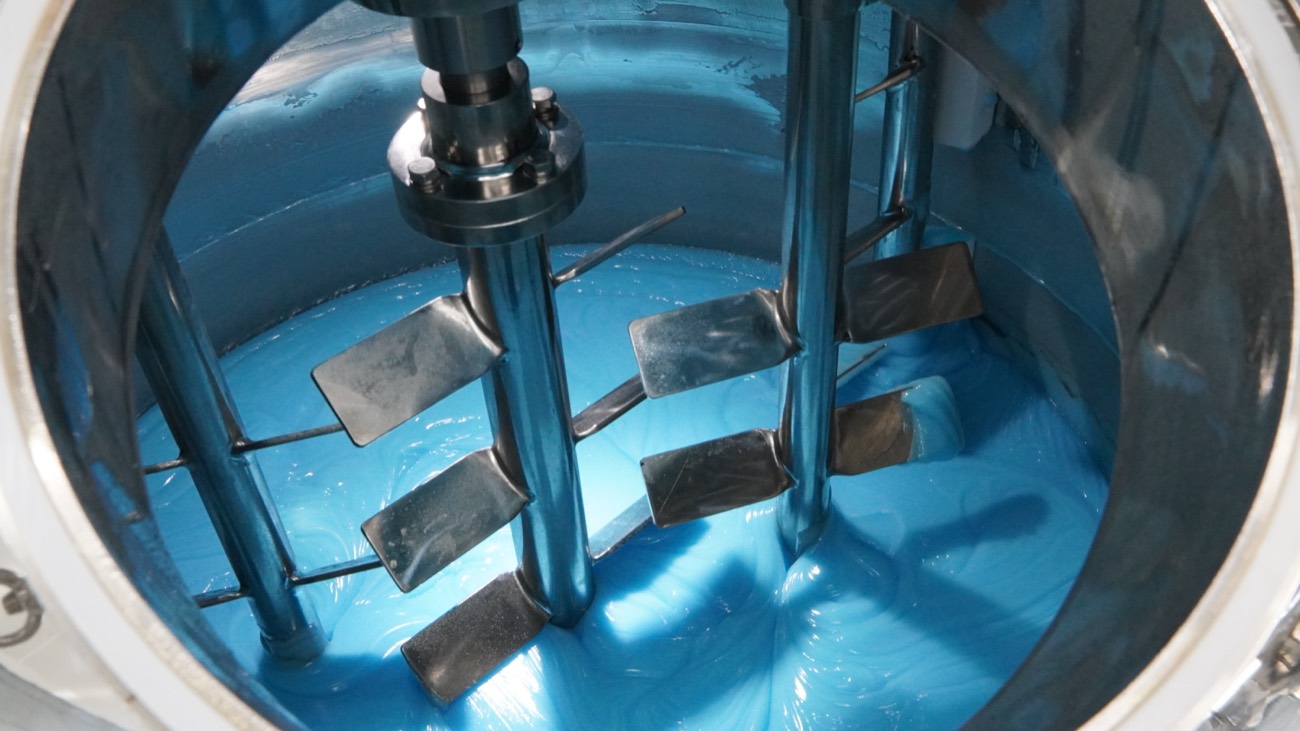
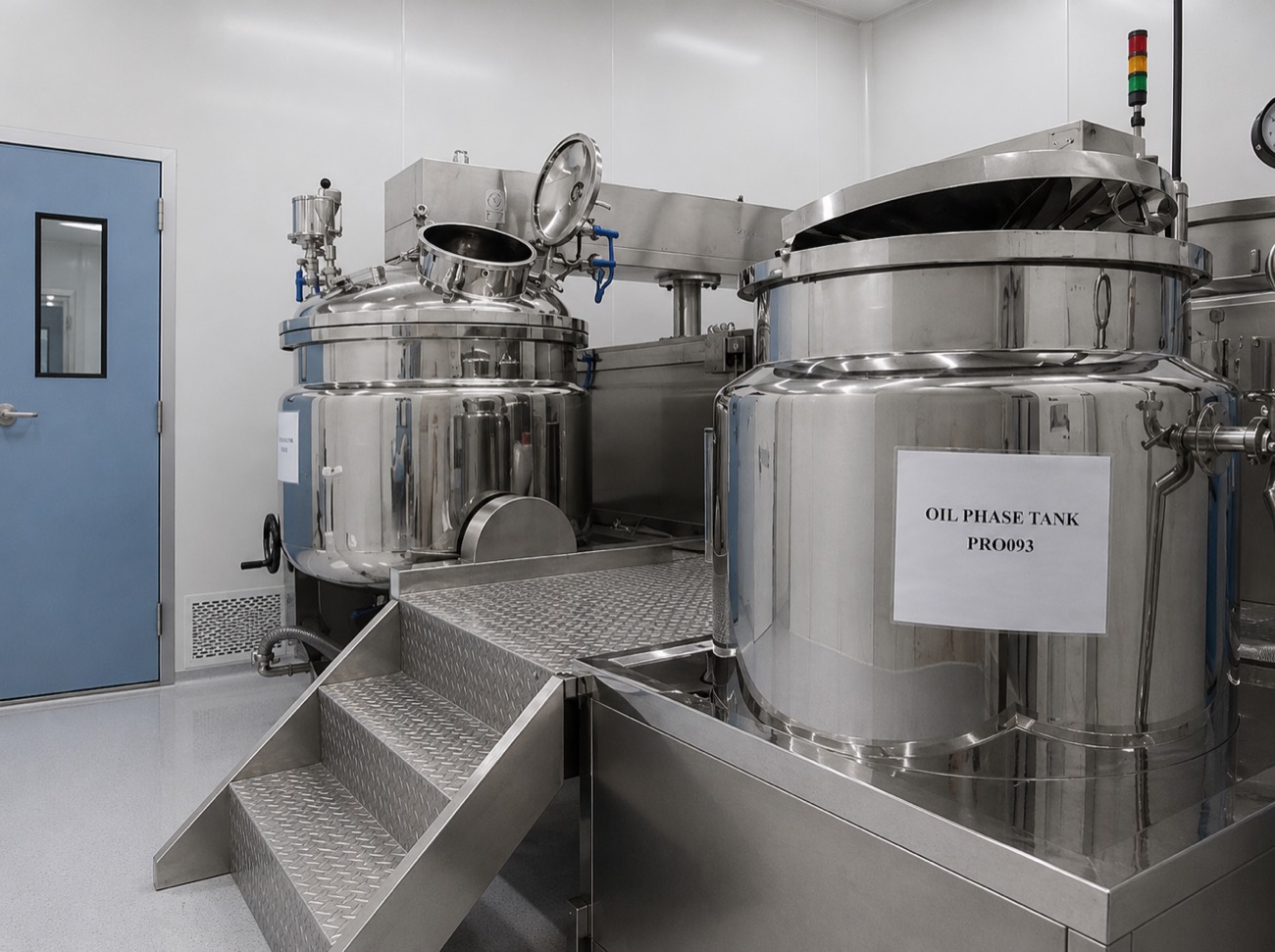
A cream is an emulsion — oil and water, which naturally refuse to mix, persuaded into a stable union. The oil phase (butters, carrier oils, waxes) and the water phase are heated separately, combined under high-shear mixing with an emulsifier that holds the two together, then cooled on a controlled curve while actives and preservatives are added at the temperatures they can tolerate. The cooling curve isn't a detail: cool too fast or shear too little and the texture breaks — grainy, greasy, or split.
Balms and salves are simpler creatures: anhydrous (no water), just oils and waxes melted, blended and set. No water means no emulsion to break and less preservative burden — which is why a balm is the forgiving format and a cream is the demanding one.
Why do creams separate, and how is it prevented?
Every emulsion wants to fail; the formulator's job is postponing that forever. The classic failure modes are universal cosmetics problems: separation (the oil and water divorce, leaving liquid on top), temperature cycling (a product that survives the lab but breaks in a delivery truck in January), preservative failure (anything containing water can grow microbes), and ingredient drift (natural butters and oils vary crop to crop, shifting texture and colour). The defences are unglamorous and decisive: a robust emulsification system, stability testing across temperature swings, a preservative system proven for the formula, and incoming-ingredient specs tight enough to catch drift before it reaches the kettle.
What changes when you add cannabinoids?
Cannabinoids are oils — lipophilic molecules that dissolve in the oil phase and want nothing to do with water. That single fact drives the whole formulation. The active rides in one phase of a two-phase system, so keeping potency uniform through a thick emulsion — first scoop of the jar equal to the last, top of the batch equal to the bottom — becomes the central manufacturing problem. And the legal bands don't bend for viscosity: under section 97 of the Cannabis Regulations, a topical must hold 85–115% of its labelled THC/CBD (±15%), inside a cap of 1,000 mg of THC per container. Hitting a potency band inside a cream is genuinely harder than hitting it in a clear oil — the assay sample has to represent a product that resists mixing. We dial it in through formulation R&D and confirm it — along with texture, scent and colour — on the pilot batch you approve before we scale. (Dosing precision differs by format; see how softgels compare.)
Why can't cannabis topicals make claims?
Health-benefit claims are prohibited on cannabis topical labels in Canada, and promotion rules are tight everywhere else. A cannabis cream cannot legally say it relieves, treats or soothes anything. That sounds like a marketing problem; it's actually a quality filter. A product that can't promise has to perform — texture, scent, absorption and effect good enough that the customer rebuys without being told to. In this category, repurchase is the only honest metric. It rewards manufacturers who obsess over the formula and starves the ones who planned to win on the label.
How are tinctures made — and dosed?
Tinctures are the chemically simple sibling: cannabinoids dissolved in a carrier oil, blended to a precise concentration, filled and capped. No emulsion, no water, no preservative system. The challenge moves from the kettle to the consumer: a tincture is dosed by dropper, and dropper dosing is only as precise as the person holding it. For brands, the format choice is a trade: tinctures offer flexible dosing and fast formulation; softgels offer fixed, repeatable doses. Many lines carry both and let the customer choose.
THC-free or full-spectrum: what's the difference in practice?
A full-spectrum topical carries the plant's broader cannabinoid profile; a THC-free product is built on isolate — a single purified cannabinoid. The choice shapes everything downstream: input cost, scent profile, the claims your retail partners can navigate, and which consumers the product can serve. A manufacturer should be fluent in both — Lupos formulates THC-free and full-spectrum versions of the same product routinely.
What does "ready-to-launch formula" mean?
There are two roads to a finished topical. Custom formulation builds your product from the ground up — longest road, most differentiated result. Ready-to-launch formulas are proven in-house recipes — already stable, already compliant, already manufactured at scale — that take your brand, your scent direction and your potency target. It's the difference between commissioning architecture and moving into a finished house. There's also a third road: re-engineering, where our formulation team takes your existing product and rebuilds it for Canadian compliance or better margins without losing what made it work.
What should you ask a topical manufacturer?
Ask whether they sell a topical of their own — nothing proves a line like competing on the same shelves you're asking them to put you on. Ask how potency uniformity is verified through the batch, top to bottom. Ask for stability data on the base formula, including temperature cycling. Ask who runs the analytical work. And ask for the MOQ and turnaround in writing — published numbers are a tell for how the rest of the relationship will run.
Lupos answers in the open: topicals from 200 kg (2,000 × 100 g), tinctures from 90 kg (3,000 × 30 g), 6–8 week turnaround with a 2-week rush, a pilot batch (texture, scent, colour, feel) included, on the same Markham line that makes PROOFLY — Canada's #1 cannabis topical, 40+ SKUs across 9 categories, winner of KIND's Best Pain Relief Topical award, exported to Australia. We compete in this category with our own money; your product is made to the standard that requires.
Start this project
Building a topical or tincture line, or moving one to a manufacturer that sells its own? A real person follows up, not a bot. Email info@lupos.ca or start a project at lupos.ca.
See topicals & oils manufacturing →
Related services & reading
Topicals & Oils Manufacturing · Softgel Contract Manufacturing · Packaging & Distribution
How to launch a cannabis topical in Canada · Distillate colour & isolate purity · All resources